
SEO & Content Growth
Technical SEO Overhaul for a Major Orlando Travel Blog
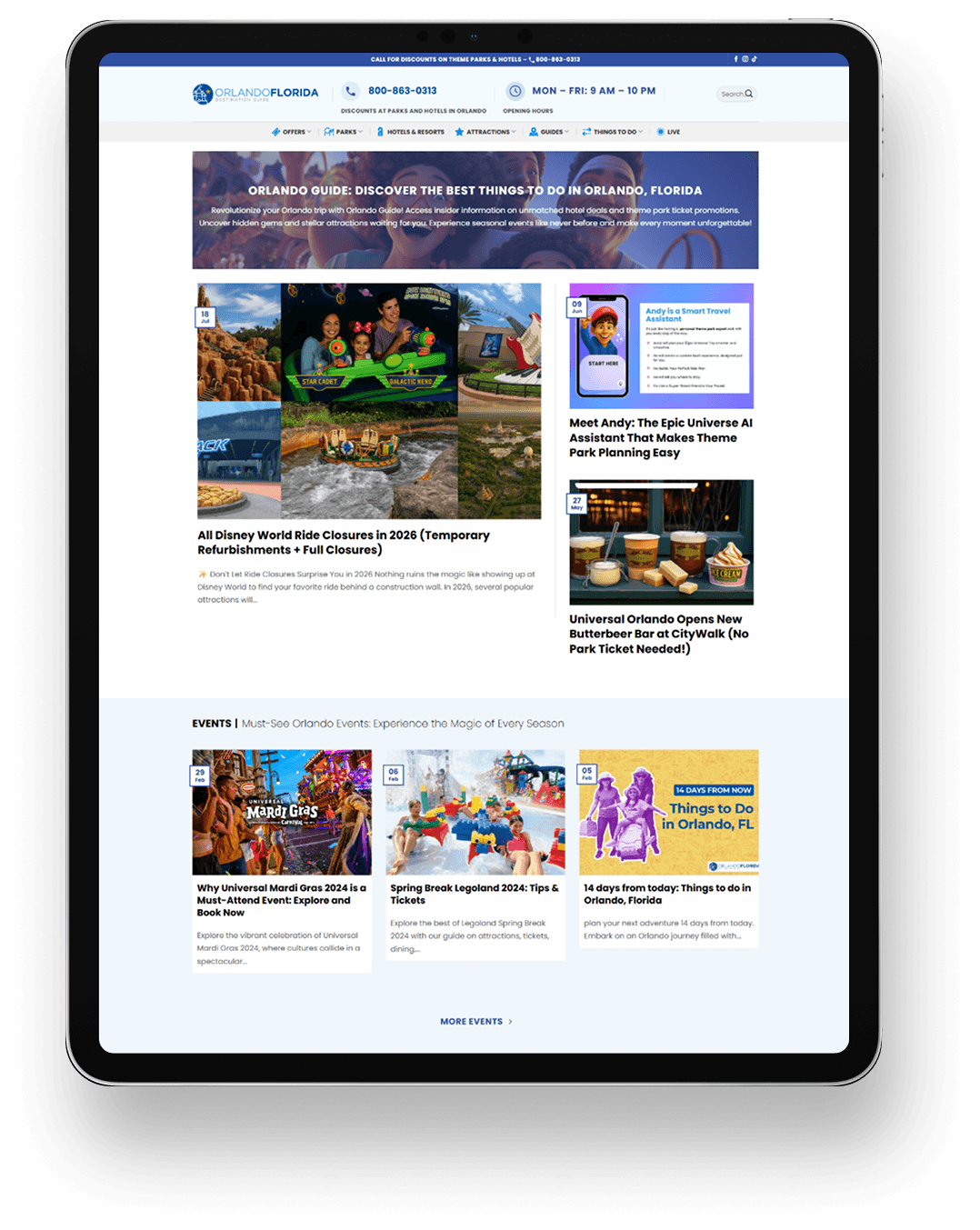
I rebuilt the site architecture, templates, and internal linking system to improve crawlability, engagement, and long-term organic performance.
SEO & Content Growth
Technical SEO Overhaul for a Major Orlando Travel Blog
I rebuilt the site architecture, templates, and internal linking system to improve crawlability, engagement, and long-term organic performance.
Role:
Product Designer (UX + SEO Integration)
Timeline:
8 months
Responsibilities:
UX Strategy, Technical review, SEO-driven improvements
Overview
Orlando-Florida.net is a high-traffic travel blog owned by Westgate Resorts.
Over the years, the site grew to hundreds of pages — but without a scalable structure.
Content quality was strong, but the SEO fundamentals were fragmented:
taxonomy, navigation, technical health, and internal linking were inconsistent.
I led a full SEO + UX foundation rebuild, including site architecture, content organization, internal linking strategy, taxonomy redesign, and technical cleanup to prepare the website for long-term growth.
The Challenge
The site had four major issues:
1. Disorganized site architecture
Clusters overlapped, important pages were buried, and navigation lacked hierarchy.
2. Technical fragmentation
Duplicate titles, multiple H1s, slow pages, heavy images, broken links, outdated templates, and inconsistent metadata.
3. Unstructured content inventory
Evergreen content mixed with outdated posts, duplicate topics, and no content lifecycle management.
4. No internal linking framework
Many high-value pages were orphaned, and topical authority was diluted across the site.
The goal was to create a clean, SEO-ready foundation for long-term growth.
SEO Audit
Technical SEO Audit
I analyzed site-wide technical issues involving:
duplicate titles and metas
multiple H1s and header order errors
large image files
slow mobile performance (LCP)
broken internal links
inconsistent URLs
orphan pages
outdated sitemap and robots.txt rules
This produced a prioritized backlog for corrections.
Content Audit
I reviewed more than 600 posts and identified:
duplicated topics
outdated or thin content
inconsistent headers
buried high-value guides
unclear tagging and categories
Each page was labeled as keep, update, merge, or redirect.
What I Delivered
SEO-Driven Site Architecture
I rebuilt the entire information architecture:
reorganized all top-level categories
created clusters for parks, attractions, hotels, food, guides
reduced click depth
standardized breadcrumbs
removed duplicate category paths
restructured URLs where needed
This made the site understandable for both users and Google.
Standardized Content Template
I created a single SEO-optimized template for all new articles:
consistent header structure
clean H1/H2/H3 hierarchy
scannable layout
optimized image handling
optional blocks for tickets/maps/prices
readability improvements
better spacing and typography
The content team now publishes using one unified system.
Internal Linking System
I built a full internal linking strategy:
pillar → cluster (hub → spoke) structure
cross-links between related guides
links from list pages to detailed pages
fixed dozens of orphan pages
improved authority distribution across clusters
This improved crawlability and topical authority.
Technical Fixes
Working with the content and dev team, we corrected:
duplicate and missing metas
inconsistent header structure
multiple H1 issues
redirect chains
slow page speed (especially mobile)
heavy images
broken links
sitemap cleanup and submission
The turning point was understanding how many opportunities were buried in the old experience.
The turning point was understanding how many opportunities were buried in the old experience.
Before & After
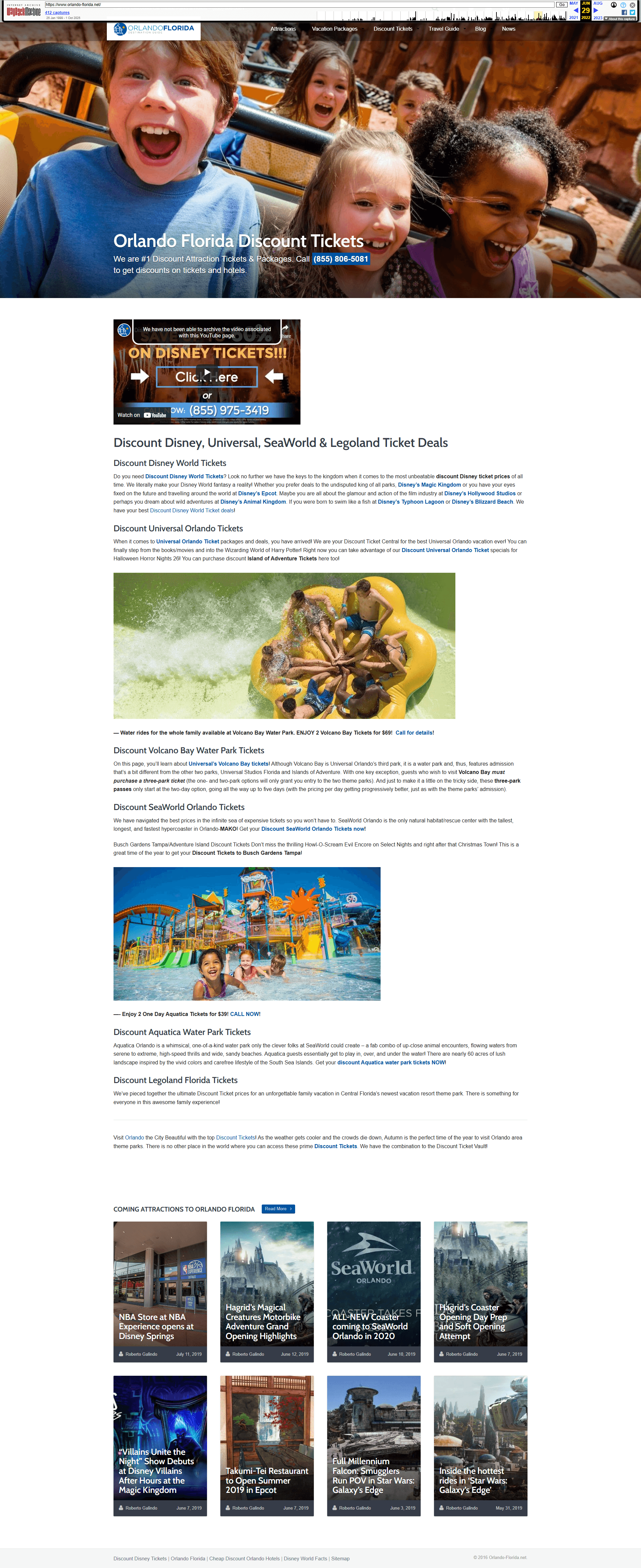
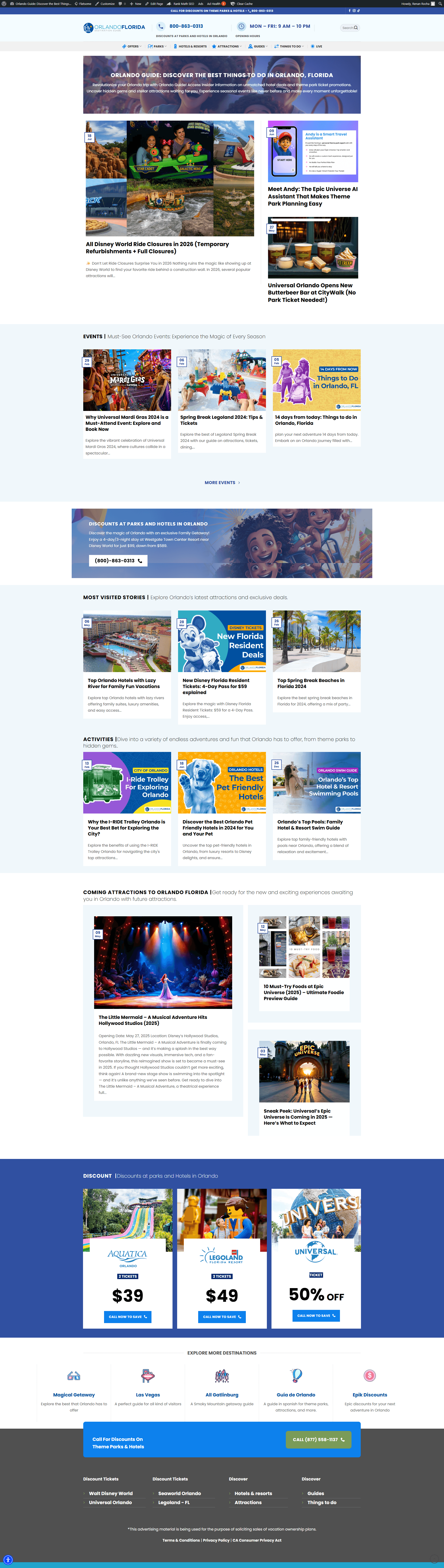
The redesign transformed a fragmented, outdated blog into a structured, search-ready platform.
By rebuilding site architecture, clarifying content hierarchy, improving internal linking, and modernizing the visual system, the new experience became faster, clearer, and far more discoverable.
The update removed friction, reduced crawl waste, and aligned the site with how both users and search engines navigate travel content.
Impact
The SEO overhaul delivered measurable and defensible results across traffic, visibility, and search coverage.
Organic traffic grew by more than 200%, climbing from 10k to over 31k monthly visits as the site recovered from previous declines and expanded its presence across hundreds of high-intent queries.
Search visibility also increased, with total ranked positions rising by over 43% (from 35k to 50k keywords). This growth reflected a more structured information architecture, improved internal linking, and stronger topical authority.
With 524 referring domains reinforcing credibility, the site regained stability and achieved its strongest performance in years — all without paid traffic.
+201%
+201%
organic traffic growth
organic traffic growth
+43%
increase in ranked positions
524
referring domains
Next Case: PPC | $19M ad spend proof
Next Case: PPC | $19M ad spend proof
Want to discuss a potential fit?
© 2025 All right reserved
Made with ❤️ by Renan.
Want to discuss a potential fit?
© 2025 All right reserved
Made with ❤️ by Renan.
Want to discuss a potential fit?
© 2025 All right reserved
Made with ❤️ by Renan.